Research and record-keeping have different jobs.
Agents can search and verify sources. A strict importer checks the resulting observations before they become dashboard data.
ShinyHunter
For rare stationery, elusive editions, and the things that keep finding their way back onto the wishlist.
Follow the hunt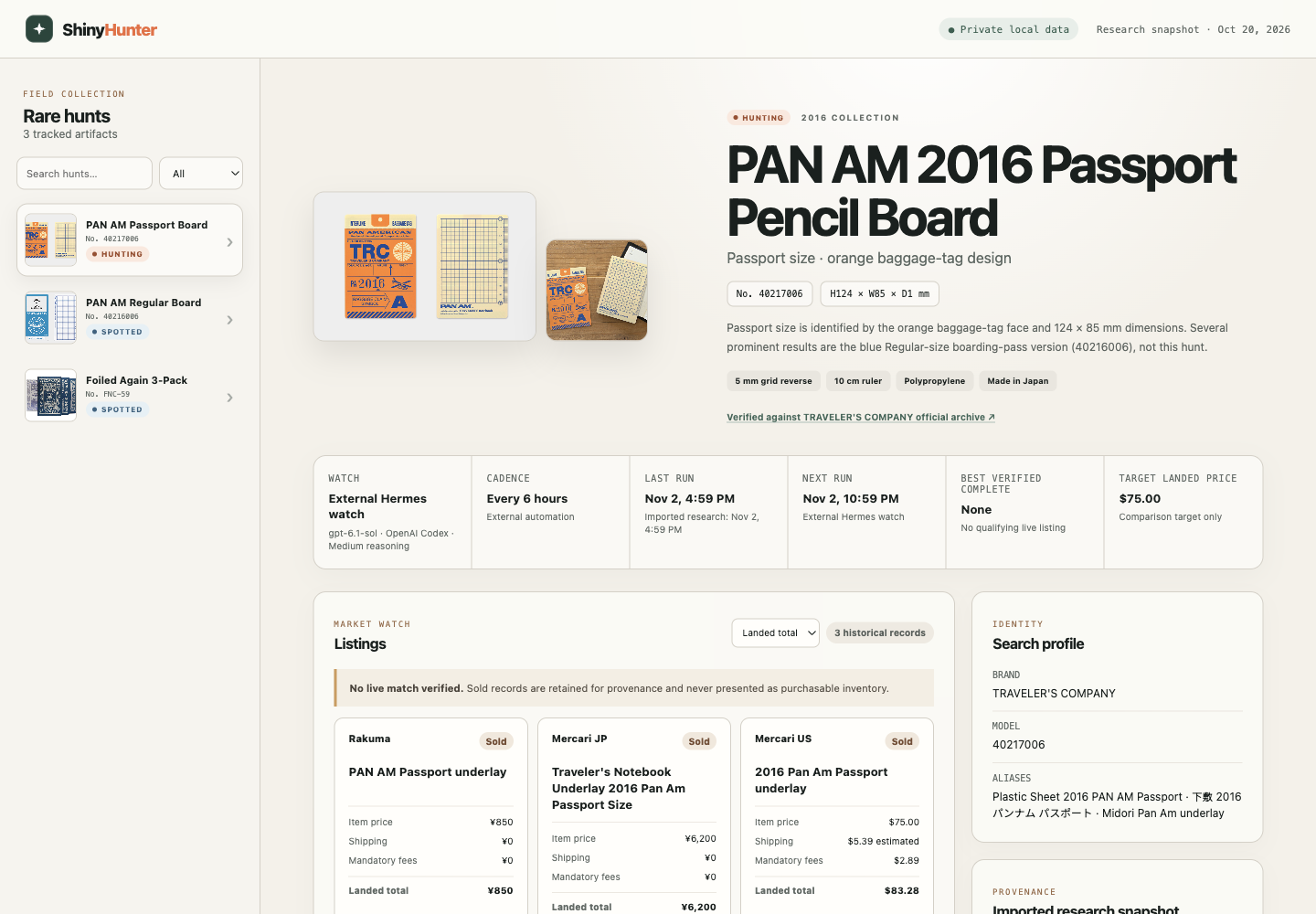
THE SMALL OBSESSION
Collecting has a research problem. The name changes between marketplaces. A regular-size board looks almost like the Passport edition. A promising listing turns out to have sold months ago.
ShinyHunter gives that search a place to live: the exact object, the possible matches, the prices, and the evidence behind each one.
HOW A HUNT COMES TOGETHER
Pin down the model, variant, size, and identifying details. Similar is a lead; exact is the goal.
Collect marketplace listings and research. External watches can bring new observations back into the dashboard.
Track source links, condition, availability, and what was actually checked.
Compare item price, shipping, and fees. Unknown costs stay visibly incomplete.
A LOOK INSIDE
Two hunts from the actual dashboard: a PAN AM pencil board and a Field Notes edition. Open either view at full size to look closer.
A HUNT HAS A HISTORY
A lead can appear, get checked, slip away, or finally join the collection. The status keeps that story legible.
The search is open. The exact object is still out there.
THE INTERESTING BIT
Agents can search and verify sources. A strict importer checks the resulting observations before they become dashboard data.
Failed research runs retain their own status while the previous useful results remain available.
Historical listings can help explain identity and pricing. They’re kept separate from things that might still be available.
A private collecting experiment built with React and TypeScript, with a separate research-and-import pipeline. The screenshots are captured research snapshots, rather than live inventory.